
Spectral and Spatial Divergence Between Genres
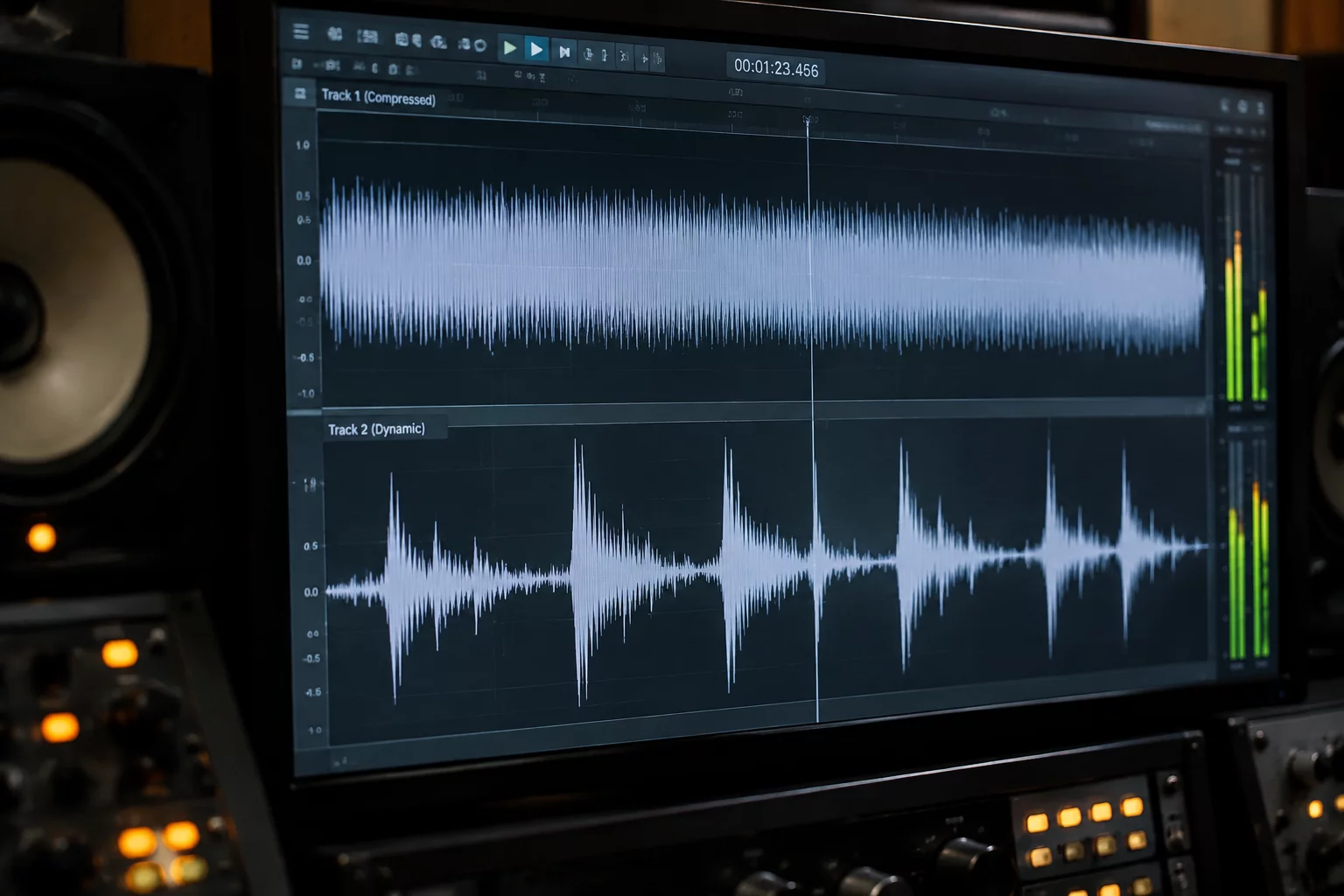
Every music genre occupies a distinct physical footprint in the frequency spectrum. A modern electronic production relies on hard brickwall compression, sub-bass saturation below 45 Hz, and razor-sharp digital percussive transients. When you place that directly next to an organic post-punk cut or an analog dub piece, the clash is not just about tempo or key signature. The real collision occurs because their transient profiles, room dimensions, and noise floors belong to entirely different sonic dimensions.
If you attempt a linear crossfade between such tracks, the human auditory system immediately perceives a hollow drop in perceived loudness or an overwhelming burst of midrange clatter. Solving this friction demands an intentional re-sculpting of track boundaries. Rather than blending two conflicting walls of noise simultaneously, you manipulate the outgoing track by stripping away its distinctive acoustic identity before introducing the first transient burst of the incoming piece.
Transient Neutralization and Envelope Management
The initial phase of a textural change rests on transient suppression. When exiting a dense, hyper-compressed arrangement, apply a steep low-pass filter slope to push the lead elements into the background. Simultaneously, introduce a subtle spatial wash with a short pre-delay reverb tail. This specific move softens the harsh, aggressive transient snaps, effectively blurring the synthetic edges into a diffuse, neutral texture.
"Genre boundaries dissolve the moment transient sharpness and spatial ambience are deliberately decoupled before the handoff occurs."
Once the outgoing layer is smeared into an ambient drone, the incoming organic track receives an unobstructed stage. Even if its live acoustic drums carry significantly more natural crest factor and less compressed low-end weight, the contrast feels like an intentional dramatic reveal rather than a clumsy mixing error. The ear welcomes the wide dynamic swing because the previous density has already evaporated.
Execution Bounds and Acoustic Reference Points
Mastering texture transfers requires adhering to defined physical thresholds. Exceeding dynamic tolerance levels leads to acoustic chaos or total energy drain across a club system. The table below delineates the baseline criteria tested across real-world performance systems.
| Metric Parameter | Nominal Target | Dynamic Boundary |
|---|---|---|
| High-Frequency Tilt (8kHz+) | -3.5 dB Attenuation | ±1.2 dB Margin |
| Reverb Re-injection Time | 1.8 Seconds Decay | Max 2.4s Ceiling |
| Crest Factor Variance | 4.2 dB Differential | 5.0 dB Max Threshold |
Harmonic Decoupling and Energy Re-anchoring
Traditional continuous mixing principles prioritize camelot wheel harmonics above all else. In extreme textural cross-pollination, harmonic rules take a secondary backseat. Pitch clash ceases to offend the listener if the frequency bands carrying the melodic information are decoupled before the structural exchange happens. You achieve this by dropping the midrange shelf on Deck A precisely two bars before the rhythmic drop of Deck B.
Once the incoming rhythmic anchor lands on downbeat one, execute an immediate swap on the low-frequency trim. Never allow dual kick drums of radically different compression densities to fight in the sub region. A singular, deliberate bass swap re-establishes the groove footprint instantly, turning what could have been an awkward genre collision into a standout set highlight.