
The Acoustic Trap of Density Accumulation
Prolonged high-intensity arrangements steadily saturate the dynamic ceiling of venue sound reinforcement systems. As relentless sub-bass waveforms and aggressive mid-range synthesizers hammer the room across consecutive tracks, listener ears suffer temporary threshold shift, dampening sensitivity to transient nuances. Standard mixing practice often seeks to fight this fatigue with incremental volume boosts, yet that tactic merely accelerates physical listener exhaustion and driver distortion.
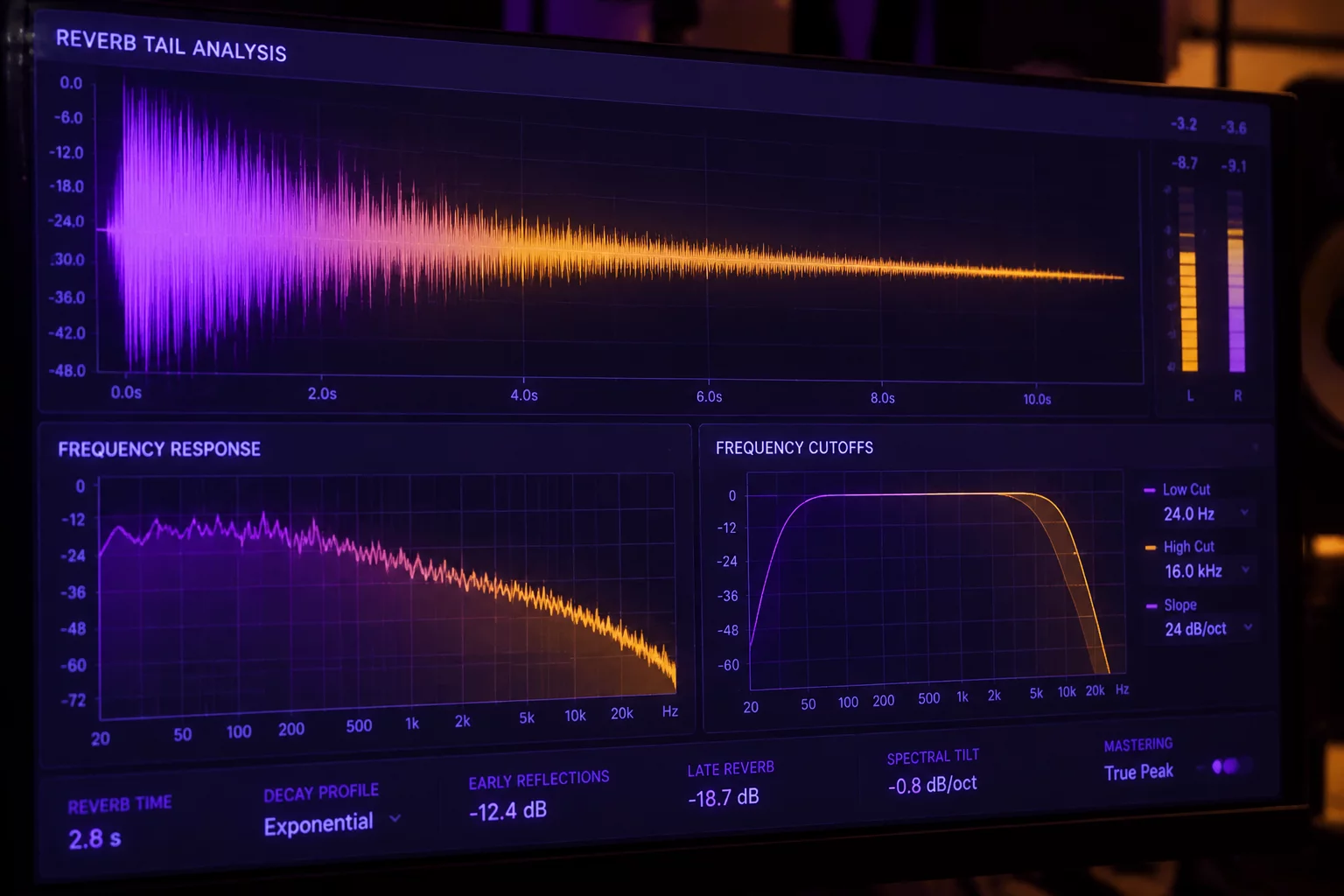
An abrupt fader cut introduces its own set of problems, ripping the rug from beneath the room with an awkward structural fracture. The reset transition solves this paradox by trading visceral low-end mass for vast, non-rhythmic stereo diffusion. Instead of creating dead silence, it disperses lingering harmonics into a controlled tail, resetting acoustic pressure while maintaining atmospheric containment.
Buffer Freezing and Low-Cut Evacuation Mechanics
Execution begins with an uncompromising surgical low cut right before the wet buffer captures the incoming phrase. Allow unattenuated sub frequencies below 250 Hz into a high-decay algorithmic reverb, and the resulting low-end wash will muddy the club acoustics for bars on end. The primary deck fader must drop sharply or pass exclusively into a dedicated high-pass sidechain the exact instant the buffer activates.
"When sub-bass energy is extinguished while upper harmonics sustain into a cavernous stereo field, the dancefloor perceives zero silence yet experiences total physical decompression."
At the conclusion of a 32-bar cycle, trigger a 100% wet reverb send on the final melodic snare or vocal transient, kill the dry signal instantly, and let the space unfold. The persistent four-on-the-floor pulse vanishes, while shimmering high-frequency reflections float across the soundstage, carving out a cavernous sonic vacuum for whatever comes next.
Envelope Timing and Decay Calibration Metrics
Calibrating a reset transition demands precise control over three primary acoustic parameters: pre-filter corner frequency, decay duration in musical divisions, and dampening coefficients. Miscalculating any of these variables either clutters the floor or cuts the tail prematurely before the arrival of the incoming phrase.
| Acoustic Parameter | Nominal Target | Critical Threshold |
|---|---|---|
| High-Pass Cutoff (Input) | 320 Hz – 450 Hz | Never below 280 Hz (prevents mud) |
| Decay Tail Length (RT60) | 4.2 s – 6.5 s (2–4 bars at 126 BPM) | Cut before beat 1 of drop |
| Wet/Dry Crossfade Velocity | Instantaneous (1/16-beat grab) | < 50 ms to avoid phase artifacts |
Perceptual Relief and Clean Downbeat Resolution
During the two to four bars of unencumbered decay tail, the human auditory cortex undergoes meaningful dynamic recalibration. The absence of low-frequency sound pressure creates physiological relief on the chest and ears, heightening anticipation for incoming rhythmic cues. Crowd focus shifts from moving to the kick to absorbing the spatial environment.
As the tail attenuates toward its tail end, introduce the incoming track with surgical timing. A sudden kick drum or sub drop hitting beat 1 directly into clean, vacated headroom produces maximum punch. Because the room was emptied of competing low frequencies, the new kick transient feels substantially heavier without demanding extra gain on the master bus.