Spectral Masking and Acoustic Handover
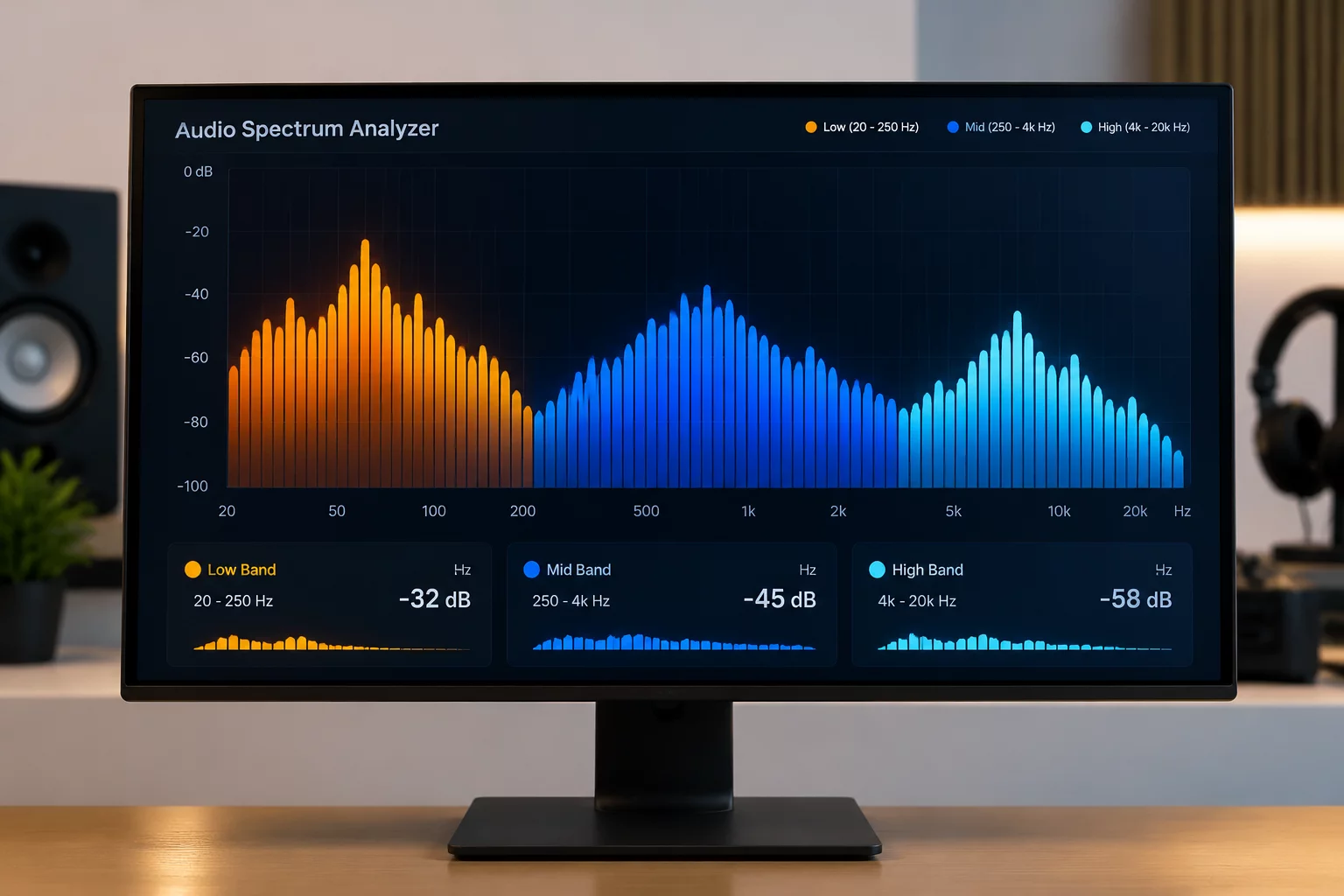
When two dense arrangements overlap without frequency carve-outs, sound energy accumulates indiscriminately across the master bus. Frequencies below 150 Hz trigger immediate phase conflict, dragging down groove precision and forcing sound system limiters into unnatural pumping. Continuity blending abandons broad volume fades in favor of carving complementary spectral slots for each incoming element.
Outgoing elements release their frequency zones progressively, preventing loudness spikes while preserving perceptual drive. The dancefloor feels no drop in pressure because the kinetic groove continues without disruption. By separating transient spikes from sustained harmonic weight, the performer creates a seamless transfer where the audience experiences both tracks as one cohesive soundscape.
Stepwise Band Exchange Workflow
Systematic execution depends on respecting phrase boundaries, typically mapped across 16-bar or 32-bar sections. The transition initiates with the incoming track's low-frequency isolator set to full cut, while mid and high bands sit slightly attenuated. Bring in the high-frequency percussion during the opening bars to establish rhythmic sync alongside the primary groove.
Staggering the frequency crossover points across distinct phrases turns a mechanical track switch into an organic musical progression.
At the central phrase boundary, swap the midrange presence band with a steady rotary turn. This maneuvers lead synths and vocal lines into focus while keeping the original rhythm section driving underneath. Once the secondary theme establishes authority, perform the decisive low-band swap on bar thirty-three downbeat, instantly dropping the old kick drum while engaging the incoming sub-bass.
Core Calibration Parameters
Smooth spectral blending demands precise isolator slopes and zero tolerance for phase drift. Traditional mixer EQs with gentle six-decibel roll-offs leave significant residual energy in cut bands, causing low-end build-up. Steep eighteen to twenty-four decibel isolator curves provide true acoustic cutoffs essential for surgical handovers.
| Acoustic Parameter | Standard Baseline | Operational Tolerance |
|---|---|---|
| Sub-Bass Handover Window | Instant downbeat cut | Max 1 beat overlap |
| Midrange Crossover Duration | 16 to 32 musical bars | ±1.5 dB headroom limit |
| Isolator Cut Attenuation | -24 dB to full kill | Complete isolation floor |
Harmonic Resolution and Phase Alignment
Midrange frequency blending exposes tonal friction quickly when incoming arrangements run incompatible chords. Evaluate Camelot wheel relationships beforehand to ensure shared or complementary keys. Compatible harmonies support warm, overlapping layers, whereas clashing tonalities require shorter handoffs and assertive high-pass filtering.
Micro-timing discrepancies between simultaneous percussion elements induce severe comb filtering, hollowing out snappy snares and vocal bodies. Monitor the phase correlation meters during extended blends; when the mid frequencies begin to sound thin, subtle platter adjustments realign transient peaks and restore solid acoustic impact.